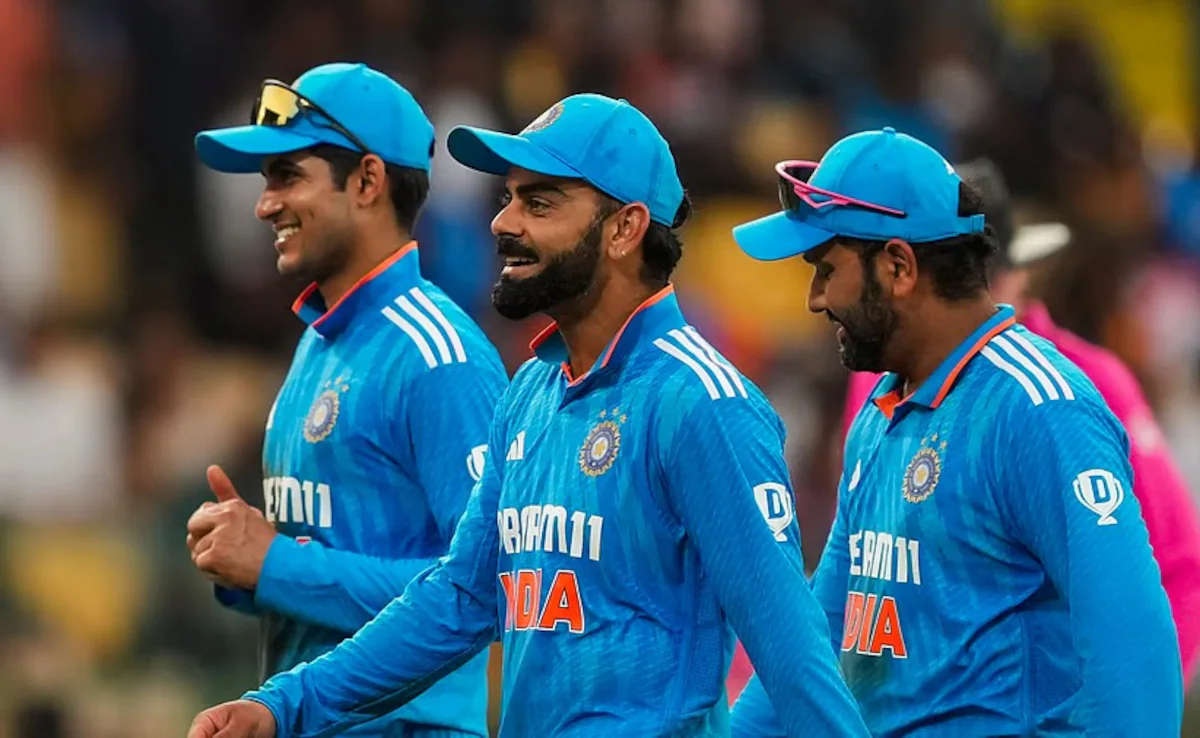
Shubman Gill is captaining India in the current ODI series against the West Indies. India won the first ODI by eight wickets, successfully chasing a target of 296 runs. In the second ODI, West Indies scored 405 runs at Barsapara Stadium in Guwahati, and India successfully chased down the target. Gill himself delivered a match-winning performance in the second ODI, hitting an unbeaten 223 and successfully chasing down 406 runs. When discussing the importance of having experienced players in the squad, Gill looked back on their role in the team’s success.
On JioHotstar, Shubman Gill said, “I feel extremely lucky. Virat bhai is probably the best ODI batter, and Rohit bhai is the best ODI opener in the world. And then to be able to have these two players in the team and their experience, and the moments that they have shared together, it is great, and we really enjoy having them in the team. And their experience is very valuable for us.”
India will open their ICC Men’s ODI World Cup 2027 campaign against Australia, the defending champions, in Cape Town on October 7, with their highly anticipated match against Pakistan set for October 10 in Johannesburg. India have been grouped with Australia, Pakistan, Afghanistan, Zimbabwe, and Qualifier A in Group A for the 14-team tournament, to be co-hosted by South Africa, Zimbabwe, and Namibia.
Rohit Sharma and Virat Kohli put on impressive performances throughout the series. Kohli made 139 not out in the first ODI, and Rohit Sharma hit a century in the second ODI. In 2026, Rohit scored 512 runs in 11 ODIs, averaging 46.54, with two centuries, one half-century and a top score of 138. Virat has amassed 552 runs in 8 ODIs, averaging 78.85, including 2 centuries and 3 half-centuries, with his highest score being 139 not out.
He added, “Often, not just those two (Rohit and Virat for advice); I go to even KL or Shreyas, for that matter. I like to take everyone’s opinion, but then, at the end of the day, if I feel, ‘Okay, this is something I missed in my mind, that I didn’t consider,’ then I take their opinion. But most of the time, it happens that if they come to suggest something, then I might have thought about it. If I have not thought about it, then I will think about what their thoughts are, what their opinions are. So, you listen to everyone, see what they are thinking, and then what, according to me, would work best in that situation; I think learning comes from that.”