
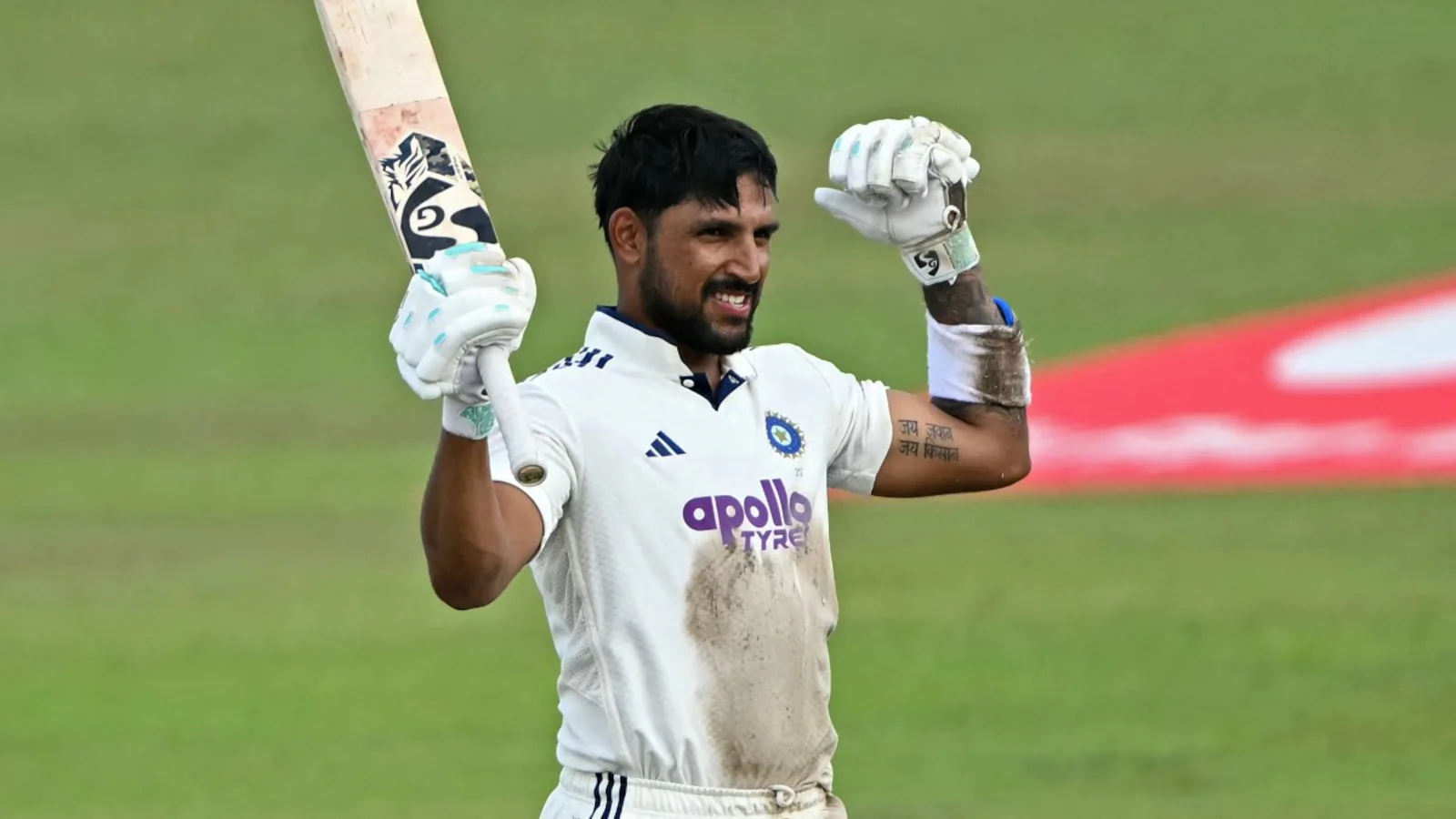
On the second day of the Colombo Test match, Dhruv Jurel needed 13 deliveries to reach his century from 99. The entire team in the dressing room, including captain Shubman Gill and head coach Gautam Gambhir, kept a close eye on him at this time. After much waiting, Jurel finally made history by taking a single against Asitha Fernando to get his second century, which was also his first century outside of India. The whole team applauded him.
Jurel scored his first Test century against the West Indies last year, and this was his second. Jurel celebrated attaining the milestone by lifting his sleeve to reveal a tattoo that said, “Jai Jawan, Jai Kisan.” Observers were immediately drawn to the gesture, raising concerns about the tribute’s significance. The personal significance of the tattoo decision was later disclosed by Jurel.
The BCCI’s account has posted a video of Dhruv Jurel showing off the tattoo. Jurel clarified, “My grandfather was a farmer, and my father was a soldier. So those are my roots, where I come from. I don’t want to forget that, so that celebration was for my father and grandfather. I dedicate this century to them. Everyone can see how I play, but there’s a lot that goes into my background, what they’ve done. Without their support, nothing would have been possible.”
His grandfather is a farmer, and his father is in the Army. “Hail the soldier, Hail the farmer” is how the expression “Jai Jawan, Jai Kisaan” translates, paying direct tribute to both family members and their occupations. With the tattoo acting as a constant reminder of those ties, Jurel’s celebration demonstrated his strong ties to his family’s agricultural and military heritage.
With 117 runs, Devdutt Padikkal became the first Indian player to reach 100 in the game. Before the declaration on day two, India had a substantial first-innings total thanks in large part to Jurel’s undefeated century later in the innings. India was able to take control of the Test match at the SSC Ground thanks to the two hundreds.


